

In your import file, products may already be associated with categories or collections. However, sometimes the collection names in your file are different from the collections in your Shopify store.
In this tutorial, we will learn how to match collections.
Example import file:
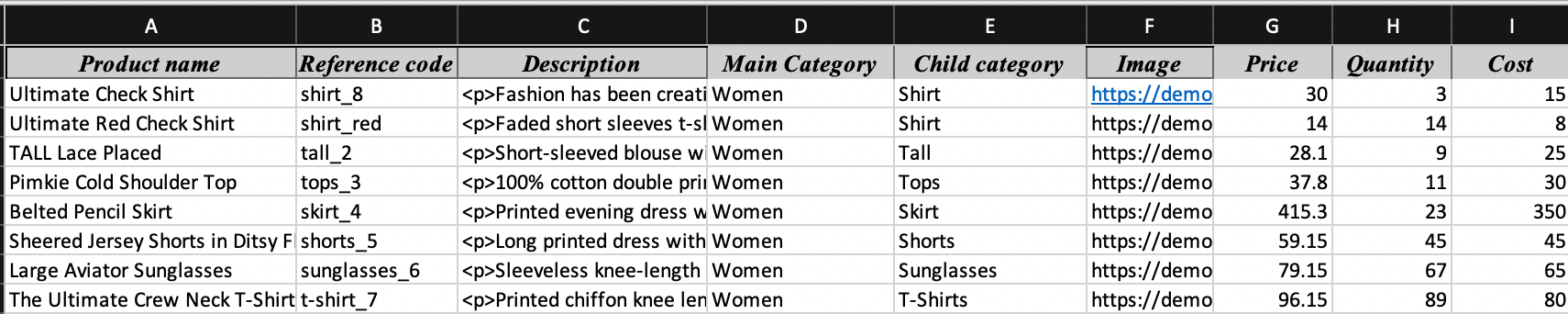
In this file, we have two columns with collections: Main Category and Child Category.
Example scenario: In the file, there is a collection called Sunglasses, but in your store, these products should appear in the collection Luxury Sunglasses.
Step-by-Step: How to Map Collections
Step 1: Go to the Associations tab in the Products Sync Master app.
Step 2: In the Collections import method setting, choose how you want to import collections (e.g., by Collection Name or Collection Tree).
Step 3: Select the file column that contains the collections (e.g., Main Category or Child Category).
Step 4: Click on Link collections from file to existing store collections.
Step 5: Add a mapping rule:
- File value: Sunglasses
- Store collection: Luxury Sunglasses
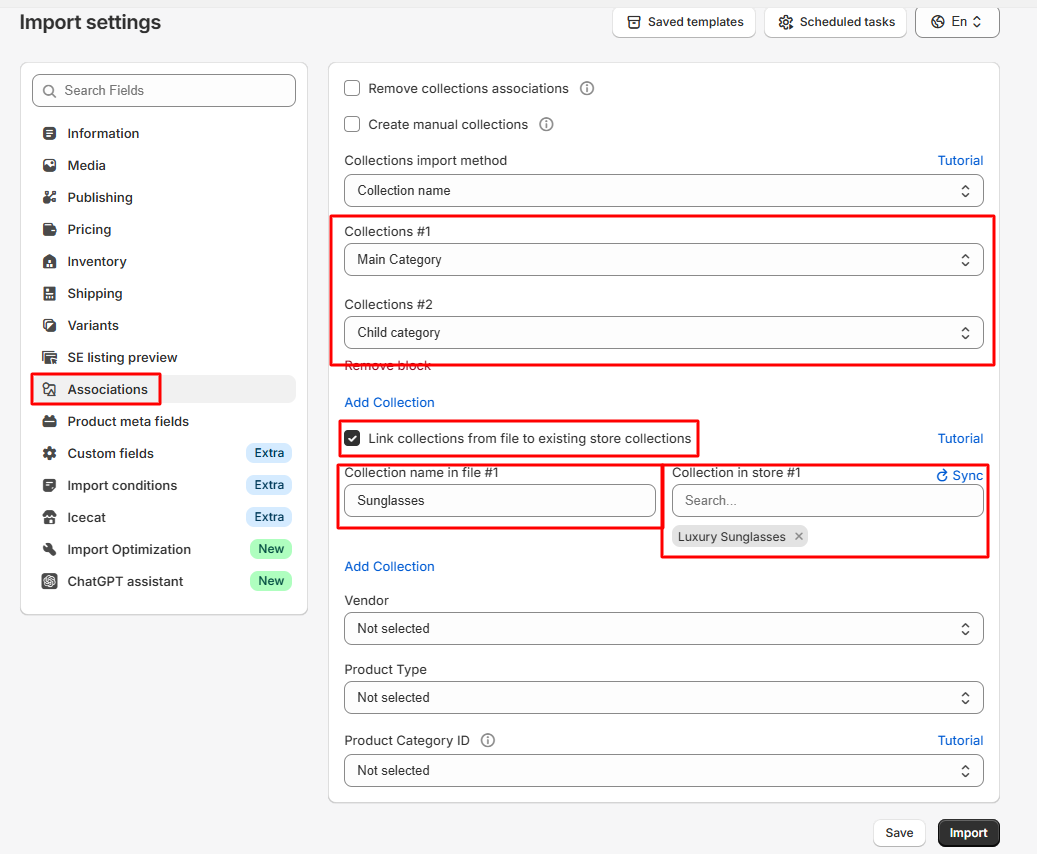
Step 6: Save your settings. Now, every time the system finds Sunglasses in the file, it will automatically assign products to Luxury Sunglasses in your store.
Why Use Collection Mapping?
- Ensures consistency between supplier files and your Shopify collections.
- Saves time by avoiding manual adjustments after import.
- Supports multiple mapping rules for different categories.
- How to Import Product Variants
- How to Map Collections During Import
- Import Files by Dynamic URL Pattern
- Import Files from FTP with Dynamic File Names
- How to Import Product Translations
- Import Products from Google Sheets
- Error during sync locations - need to update access scopes
- Import Optimization – Control New & Existing Product Updates
- Generate Variants from Option Values
- Import Products from Icecat Catalog
- Import Conditions – Control How Products Are Imported
- Import Product and Variant Metafields
- How to Import Collections
- How to Import Product Categories (Shopify Standard Taxonomy)
